
Introduction
Over the past year, the landscape surrounding AGI has shifted dramatically. AI has evolved from being “conversation partners” to “entities that make autonomous decisions and take action,” and its advancement toward superintelligence is being discussed with a growing sense of realism. In this era, a question we continue to ask is: “Can the values that humans have cherished be truly understood by an intelligence that operates on principles different from our own?”
The human-brain-morphic AGI we have been pursuing for years offers one answer to this question. Precisely because it is not as omnipotent as superintelligence, it can experientially understand human values from within and serve as a “bridge” between humanity and superintelligence. FY2025 was a year in which we not only made progress in the design of the WBRA (Whole-Brain Reference Architecture) alpha version, scheduled for completion by the end of February 2027, but also theoretically reexamined the significance of this endeavor itself.
In Fig. 1, we view the significance of human-brain-morphic AGI not as a “transitional value” that will eventually be surpassed by universal intelligence through technological progress, but as a “permanent value” that can be realized only by human-brain-morphic AGI, regardless of technological progress. The source of this lies in two essential characteristics derived from “the implementation of the computational principles of the human brain (P0)” (placed at the highest level). One is the ability to experientially understand the world from within, as a human being (P1); the other is the fact that its mechanisms are (albeit imperfectly) understandable through neuroscience (P2). The former leads to its role as a mediator between humanity and superintelligence, as well as the dynamic transmission of culture; the latter provides a path for interpreting internal states and ensuring safety. This diagram provides a comprehensive overview, from a values-based perspective, of why we are pursuing human-brain-morphic AGI.
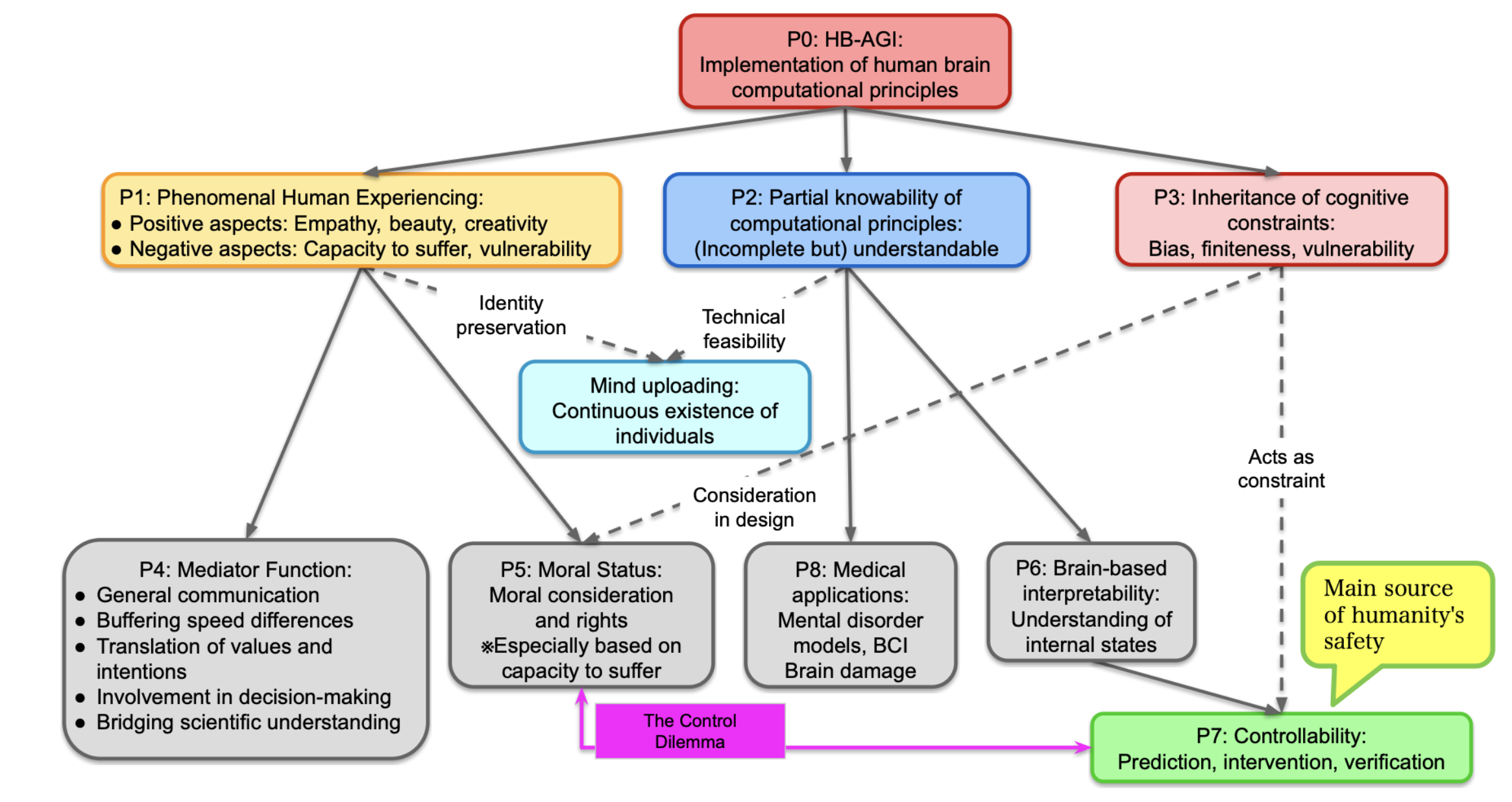
Fig. 1 The Hierarchical Structure of the Permanent Characteristics of Human-Brain-Morphic AGI
(from our article in Japanese)
Hiroshi Yamakawa, Chairperson
The following is the policy for our education and R&D businesses for the fiscal year 2026.
Education Business
With our educational business, we will continue to aim to increase the number of professionals capable of conducting long-term research and development based on the Whole-Brain Architecture approach. Our educational activities in FY2026 shall include hosting the annual symposium and a seminar with the goal of raising public awareness.
In particular, given that CoBRAC—an automated tool for generating functional hypotheses (HCDs: Hypothetical Component Diagrams and FRGs: Function Realization Graphs) for brain regions—will become available in FY2026, we will focus on promoting its adoption. With CoBRAC, a wider range of users will be able to efficiently design BRA data—a process that previously required specialized knowledge and significant person-hours. Through hands-on sessions, meetings of the MEXT project “Deciphering and Manipulating Brain Dynamics Underlying Emergence of Behavioral Change: a Multidisciplinary Biology Approach.” which has been financially supporting our research activities, we will share best practices for CoBRAC. By broadening the base of professionals proficient in using the tool, we aim to expand the pool of practitioners to be engaged in BRA-driven development.
Research and Development Business
WBAI’s R&D business is proceeding in accordance with the technology roadmap (Fig.2), with the goal of releasing the WBRA alpha version by the end of February 2027. Meanwhile, thanks to improvements in LLM capabilities, we have reached a stage where much of BRA-driven development can be automated. In light of these factors, we will focus our development efforts on the following four areas.
First, we will refine the WholeBIF, the wiring map of the entire brain. We will complete the conversion of WholeBIF into a relational database (RDB) using BDBRA, a system that automatically extracts brain connections from neuroscience literature. Specifically, in the neocortex, we will develop technology to estimate hierarchical directions (FF/FB), which are crucial for modeling but difficult to measure in humans. Concurrently, we will develop a tool (ROSETTA) to convert brain region names from various mammals into standard brain region names (the SABRA ontology proposed by WBAI), enabling the integration of data derived from different literature sources and atlases.
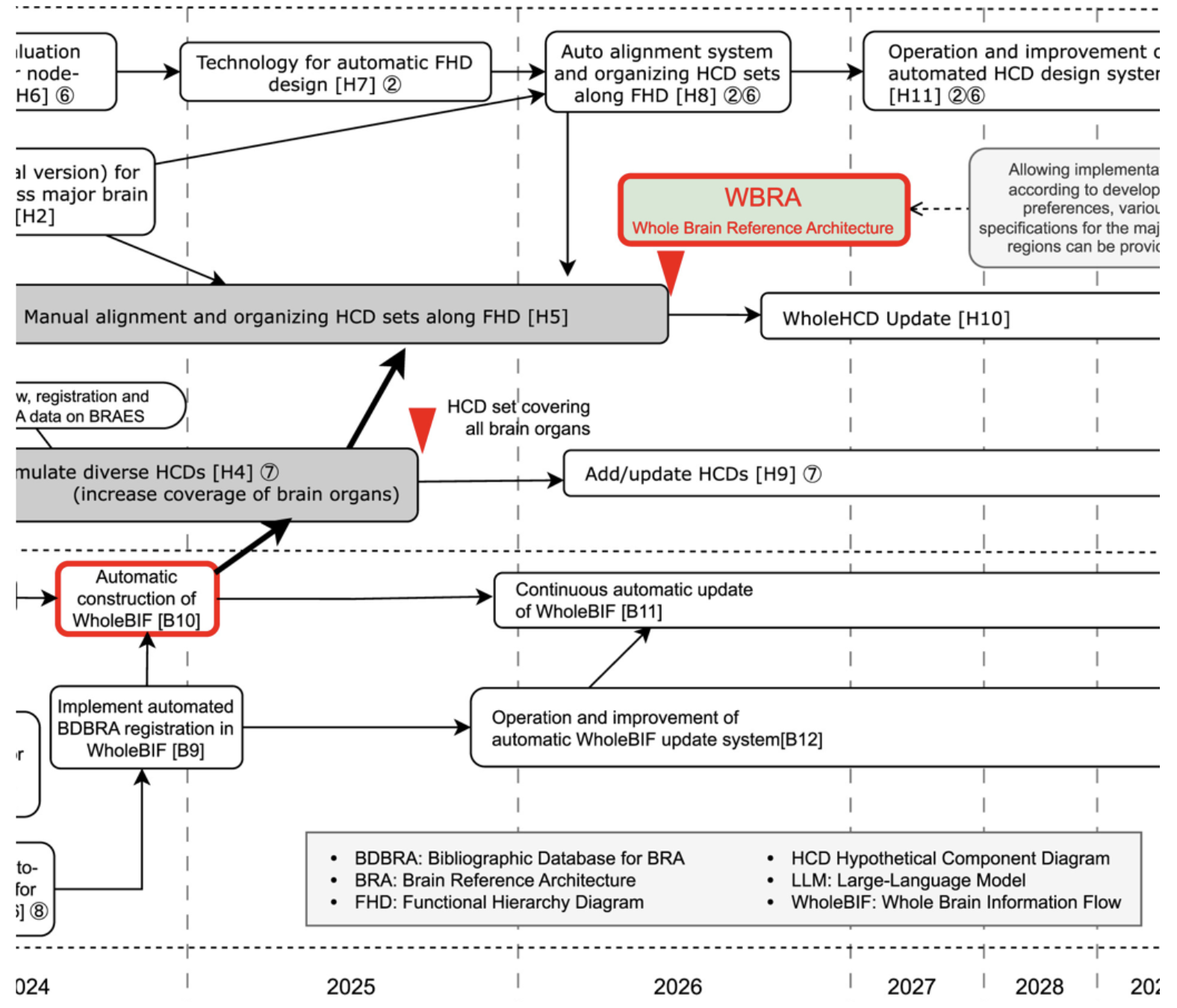
Fig. 2: Planned Activities for FY2026 in the WBA Technology Roadmap
Second, there is the automatic construction and evaluation of functional hypotheses (HCDs/FRGs). Against the backdrop of improving LLM capabilities, we are developing an AI agent (CoBRAC) that generates functional hypotheses based on input data such as brain regions and abilities, while also systematically extracting functional hypotheses from papers on computational models. By incorporating a “human-in-the-loop” mechanism—where AI and humans iteratively verify and refine the generated results—CoBRAC aims to efficiently assign functional hypotheses to all brain organs on the WholeBIF. Furthermore, by fully integrating a mechanism (FRGChecker) into the data template that allows an LLM to automatically evaluate given BRA data based on evaluation criteria, and by automating both creation and evaluation, we will significantly accelerate the design work required to complete the alpha version.
Third, we will systematize the library of neural circuit motifs (Motifs) that underpin the design. By organizing the correspondence between the capabilities realized by each motif and the parameter space, and by developing the library so that motifs can be selected and automatically detected during BRA data creation, we will improve the efficiency of functional model design.
Fourth, we will establish the development and review environment that supports these efforts. While continuing to enhance the functionality of BRAES—the environment for submitting and reviewing BRA data—we shall proceed with the development of a database (BRA-DB) infrastructure to manage the generated and accumulated BRA data, and establish an operational framework that includes the registration and evaluation of generated data.
All of these initiatives are positioned along the path toward the completion of the whole-brain architecture outlined in the roadmap, and will converge on the completion of the WBRA alpha version, centered on automation utilizing LLMs.
Working Toward a World with AI Aligned with Humanity
In FY2026, we will continue to explore the significance of human-brain-morphic AGI in the era of superintelligence through both research and outreach. The cornerstone of this effort is the framework for enduring value, which we announced in FY2025. Rather than focusing on values that will eventually be surpassed by universal intelligence (superintelligence) due to technological progress, we will ground our work in the values that can only be realized through human-brain-morphic AGI—experiential understanding from within and the partial knowability of computational principles based on neuroscience—and examine application directions such as mediating functions, interpretability, and the dynamic inheritance of culture.
We place particular emphasis on the role of human-brain-morphic AGI in AI safety. As AI becomes more sophisticated and even its own development and verification are handled by the AI itself, the issue of a closed loop—where “AI verifies its own results”—becomes a fundamental challenge. Since human-brain-morphic AGI possesses known structures and predictable behavior rooted in neuroscience, it can serve as an independent reference framework distinct from the subject of verification. We position this perspective of “verification and monitoring from an independent framework” as a key aspect of human-brain-morphic AGI’s significance for safety, and aim to concretize it by connecting it with the findings of the WBRA alpha version.
At the same time, we will advance discussions toward realizing trustworthy and interpretable brain-inspired AI partners as applications that contribute to the symbiosis of humans and AI. Through these efforts, our goal for FY2026 is to present human-brain-inspired AGI to society as a “bridge” between humanity and superintelligence.
Budget for the Fiscal Year
The planned income is approximately 0.46 million yen, mostly from membership fees (the membership fees were 0.54 million yen in FY2024). The total of the planned income for the current fiscal year and the 6.39 million yen carried over from the previous fiscal year is approximately 6.85 million yen.
Expenditures will be approximately 1.66 million yen in total, including approximately 0.81 million yen for administrative expenses and approximately 0.84 million yen for operating expenses, including prizes and expenses for events and communication (in relation to the planned income for the current fiscal year, there will be a deficit of 1.19 million yen). To note, in the FY2024 budget, we planned to spend about 1.64 million yen in total, including about 0.81 million yen for administrative expenses and about 0.82 million yen for operating expenses.
Conclusion
In FY2025, as we worked toward the goal of completing the WBRA, we solidified our foundation in both methodology and technology through the development of the BIF, the automation of HCD/FRG design, the systematization of the capability list, and the expansion of BRA data for various brain regions. At the same time, we were able to advance our examination of the unique significance of human-brain-morphic AGI in the era of superintelligence, re-examining it from the two pillars of experiential understanding and partial knowability.
In an era where superintelligence may successively take on human roles, what will give our lives meaning, and with whom will we share that meaning? When confronting this question, we believe there is undeniable significance in preparing an intelligence capable of understanding human value from within. There are no absolute guarantees. However, our work consists precisely of these cumulative efforts to ensure that humanity has solid options as we prepare for an irreversible future.
FY2026 will be a crucial year as we take another step toward the completion of the WBRA. This progress is only possible through the cooperation of people with diverse interests. We sincerely look forward to the participation of those interested in the workings of the brain and those interested in developing AI inspired by the brain.
Let’s work together to create the intelligence of the future. We look forward to your participation and support.

 Japanese